
Intermatic
Intermatic Freeze Sensor | 178PA28AMPN 178PA28A
$13199
Out of stock
Email me when it is back
New customer? Create an account
Sign in to track an order, view past orders, start a return, and save the equipment you own so every part you see already fits it.
Time switches and panels that decide when the pump runs, and almost all of them are Intermatic. The T100 series mechanical clock is the one on most pool pads in the country: a motor turns a dial once a day and two little trippers clamped to its rim throw the switch on and off. It is unglamorous, it keeps working for decades, and every part of it is replaceable, which is why this page carries clock motors and trippers as well as whole timers.


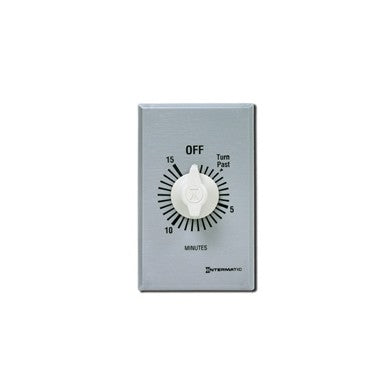


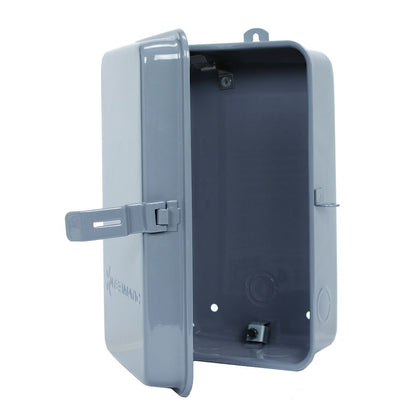
Mechanical 24 hour time switches, clock motors, trippers, freeze protection thermostats, outdoor rated enclosures and panels, mostly Intermatic with Eaton alongside. Ratings run from 20A up to 60A, and from 1.5 to 3 HP, in 110V, 120V, 240V and 208 to 277V.
Digital automation that does rather more than switch a pump is in automation and controls, and the pump the timer is switching is in pool pumps.
What is a T104, and why does everyone seem to have one?
It is the Intermatic 24 hour mechanical time switch in its most common form, and it has been the default pool timer for so long that the whole T100 family is what parts are sold against. Our parts here name T100, T104, T106, T170 and T180 series. The reason it survived is that it does one thing with a motor, a dial and a switch, all of which can be bought separately, so a forty year old timer is usually repairable rather than scrap.
How do the little tabs on the dial work?
They are trippers, and they are the whole programme. Two clamp onto the rim of the dial, one marked on and one marked off, and as the dial turns each one physically pushes the switch as it passes. So setting the schedule means loosening a screw and sliding a tripper to the hour you want. If the pump runs at the wrong times, the usual cause is not a fault: the dial has drifted because the power was off, and it needs turning back to the real time of day.
Does the timer have to match the pump?
Yes, and on horsepower rather than just on amps. A time switch carries both ratings, and ours publish things like 30A at 3 HP on 120 or 240 volts. The horsepower figure exists because a motor draws a large surge as it starts, far above its running current, and the switch contacts have to take that surge thousands of times. A timer rated only on amps can look adequate and still burn its contacts. Match the pump's horsepower and voltage and the amps look after themselves.
What does a freeze protection thermostat do?
It overrides the timer and runs the pump when the air gets cold enough to be dangerous, because moving water is much harder to freeze than still water, and a frozen pipe or a frozen pump is an expensive morning. It wires alongside the time switch and simply closes the circuit below its set temperature regardless of where the dial has got to. In a climate that only dips below freezing occasionally it is the cheapest insurance on the pad.