
Pool School, Pumps
How to Prime a Pool Pump
Active Pool Supply · Updated October 2, 2026
Turn the pump off at the breaker, close the valves and open the air relief valve on the filter to let the pressure out. Take off the lid, fill the strainer pot with water to the suction port and refit the lid by hand on a clean O-ring. Open the valves and the air relief valve, stand clear and start the pump, then close the air relief valve once water, not air, streams out. Hayward allows its Super Pump 5 minutes to prime and its variable speed pumps 10 to 15. Not primed? Switch off and wait: Pentair warns a pump that failed to prime can hold scalding water.
How to prime a pool pump, step by step
Priming fills the pump with water so the impeller has something to push. A self-priming pump lifts the rest on its own, but only once its strainer pot is full. The steps follow the Hayward, Pentair, Jandy and CaliMar manuals and name the manufacturer where they differ.
- Turn the power off at the breaker. Pentair's restart instructions begin there, before anyone touches the lid. On an IntelliFlo, disconnect the communication cable too.
- Close the valves and let the pressure out. Shut the suction and return valves. Hayward and Pentair's IntelliFlo do this every time, and Pentair's SuperFlo whenever the pump is lower than the pool's surface. Then open the filter's air relief valve to bleed off the pressure.
- Fill the strainer pot. Take off the lid and pour in water until it reaches the suction port. Pentair fills the pot and the volute to the inlet. Hayward fills to the level of the suction pipe.
- Clean and seat the lid. Wipe the O-ring and its groove, look for a crack or a flattened ring, and put the lid back by hand. Hayward and Jandy both rule out tools: no wrench on the knobs or the ring.
- Open the valves and the air relief valve. Every suction and return valve open, the unions tight, and the filter's air relief valve open so the trapped air has somewhere to go.
- Stand clear and start the pump. Restore power and start it. On a first start Hayward wants at least 10 feet between you and the pump and filter. If you stopped it a moment ago, wait 5 seconds: Hayward warns that a quicker restart can turn the motor backwards and seriously damage the pump.
- Close the air relief valve on water. Leave it open until it gives a steady stream of water with no air in it, then close it. A Pentair SuperFlo VS then finishes its priming cycle and starts normal running.
- Watch the clock, and stop at the manufacturer's limit. Hayward allows a Super Pump 5 minutes. Variable speed pumps get longer, set out by pump in the table below. Not primed by then? Switch it off at the breaker and do not open the lid yet. Pentair and CaliMar warn that a pump which failed to prime, or ran with an empty pot, can build vapor pressure and hold scalding water. Pentair opens it only once the pot is cool to the touch and the valves are open. Find the cause before you try again.
Below the water line, and how high a pump can lift
A pump mounted below the pool's water level fills itself. Hayward's rule: when the water source is higher than the pump, opening the suction and return valves primes it. Jandy's VS FloPro manual does it from the filter: open the pressure release valve and let the pool push the air out. You fill the pot by hand only when the pump sits above the water.
Above the water, the pump has to lift. Hayward and Jandy both rate their pumps to self-prime from up to 10 ft above the pool's surface, Jandy at sea level, and Pentair says not to mount one higher than that. Hayward's two speed pumps reach 10 ft on high speed only, and Hayward says a higher lift or a longer suction pipe means a longer prime.
The federal definition asks for less. Under 10 CFR 431.462, a self-priming pool filter pump either re-primes from at least 5 ft of vertical lift within 10 minutes in the DOE test, or is certified self-priming under NSF/ANSI 50. Even so, the federal definitions expect a self-priming pump's casing to be filled by hand before its first start. Self-priming means it can prime again, not that it starts dry.
How long priming should take, by manufacturer
The limits run from 5 minutes to 30. Variable speed pumps are slower because they prime below full speed, and each manufacturer sets its own clock.
| Pump | How long the manufacturer allows | Priming speed |
|---|---|---|
| Hayward Super Pump, TriStar single speed | 5 minutes, then stop and find the cause | Its one speed |
| Hayward MaxFlo VS 500 | 10 minutes | Maximum allowed speed, RPM not printed |
| Hayward TriStar VS 950 | 15 minutes. Prime setting 8 minutes by default, adjustable from 0 to 15 in half minute steps | Maximum allowed speed, RPM not printed |
| Pentair SuperFlo, WhisperFlo, two speed (older guides) | 8 minutes at most | High speed |
| Pentair SuperFlo, WhisperFlo, single speed | Not printed | Its one speed |
| Pentair SuperFlo VS, WhisperFlo VS | 5 minutes of priming mode, on as delivered | 3,450 RPM by default, set anywhere from 1,700 up. Below 1,700 priming is off |
| Pentair IntelliFlo VS+SVRS | 11 minutes by default, set from 1 to 30. Never over 30 without full flow | Tries 1,800 RPM for 3 seconds, then its priming speed: 3,450 RPM by default, 2,400 at the lowest |
| Pentair IntelliFlo3 VSF | 11 minutes by default. Never over 30 | 100 percent by default |
| Jandy VS FloPro | 14 to 15 minutes from 10 ft above the water at its default speed, within 6 at 3,450 RPM | 2,750 RPM by default, up to 3,450 |
| Jandy ePump | About 10 minutes, then off for about 10 and another try | Not printed |
| CaliMar CMARVSP | The installer times the fill and sets Speed 1's run from it | Speed 1, which is 3,000 RPM as delivered |
| CaliMar CaliFlow | Up to 15 minutes, set by the minute. Off by default | 3,400 RPM by default, 2,000 to 3,450 |
| Federal self-priming test | 10 minutes at 5 ft of lift | None set |
A failed IntelliFlo alarms, waits 10 minutes and tries again. After five failures the alarm stays until someone resets it by hand.
Full speed is not always needed. Pentair and CaliMar both say most installations prime below it, and Pentair says a pump mounted near the water's surface can prime below 3,450 RPM. Water temperature, air pressure and the pool's level all move the time, so Pentair asks installers to try a chosen priming speed more than once, letting the water drain out between tests.
Keep swimmers out while it primes. Pentair's IntelliFlo turns its SVRS entrapment protection off during priming. Jandy's ePump SVRS is inactive for up to 10 minutes after power up, and Jandy says to keep bathers out of the pool for that time.
Why a pool pump will not prime
It is nearly always air getting in or water not getting through. Hayward, Pentair, Jandy and CaliMar list much the same causes. Work down them, cheapest first.
| What you see | The likely cause | What the manufacturers say to do |
|---|---|---|
| Pot empty or part full | Not filled | Fill it to the suction port. Clean, seat and lubricate the lid O-ring (Hayward) |
| Bubbles in the basket, or out of the return jets in the pool | A suction side air leak | Lid and lid O-ring first, then the unions and their O-rings, threaded joints and valve glands. Hayward: no self-priming pump primes with a suction leak |
| Skimmer gulping air | Pool water too low | Pentair: hold the water halfway up the skimmer opening |
| Pot full, little or no flow | Basket, skimmer or suction line clogged | Empty both baskets. Hayward: the pump should pull 5 to 6 inches of vacuum at the strainer cover, which a service technician can check with a vacuum gauge |
| No water reaching the pump | Suction valve shut or stuck | Pentair: make sure it works and is open |
| Water in the pot, no vacuum | Low voltage, or debris in the impeller | Hayward: recheck the lid and fittings, then the voltage so the motor reaches full speed, then the impeller |
| Air or water at the shaft | A worn shaft seal | Hayward: replace the seal only if it leaks. Jandy: a seal leaking air is a job for a qualified technician |
| Stays in priming mode, or leaves it with air still in the housing | Priming settings | Pentair IntelliFlo: raise the priming range (default 5) in the first case, lower it in the second. IntelliFlo3 VSF: speed or range set too low |
| Pump far above the water | More lift than it is rated for | Hayward and Jandy rate 10 ft of lift. Pentair: no higher than 10 ft |
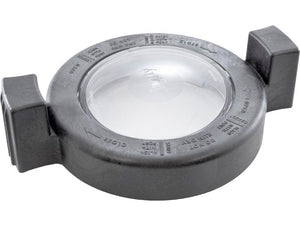
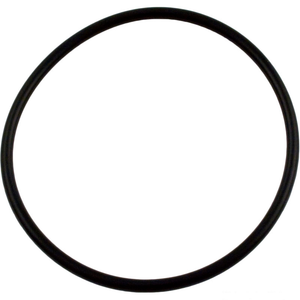
A cracked lid or a tired lid O-ring lets air in every time the pump runs. Jandy's lid and lock ring assembly with seal, R0448800, fits its PHPF and PHPM pumps. A CaliMar takes the FB2010-CO cover O-ring. Pentair sells lid O-rings by size, such as the 5-3/4 in. inside diameter ring, 350013Z.
Match any part to your pump on its manufacturer's diagram: Hayward Super Pump, TriStar, Power-Flo, Pentair WhisperFlo, IntelliFlo, SuperFlo, Challenger and Jandy. Everything else is under pool pump parts.
The lid O-ring: lubricate it or not
Hayward, Pentair and Jandy all say to keep the lid O-ring and its seat clean. They split on what goes on it.
- Hayward: clean it and lubricate it. The Super Pump manual names Jack's 327.
- Pentair: keep it clean and well lubricated.
- Jandy: the VS FloPro's start-up instructions say no lubricant and no sealant, soapy water only. The same manual's troubleshooting table then allows a very small amount of silicone lubricant, and no Vaseline.
Go by your pump's manufacturer. Whatever goes on it, the lid goes on by hand.
Never run it dry
Water cools and lubricates the mechanical shaft seal, and without it the seal is damaged. The manufacturers:
- Hayward: running dry may damage the seals, cause leaks and flooding, and void the warranty.
- Pentair: a pump run dry damages its mechanical seal and starts to leak, and the seal must then be replaced.
- Jandy: running dry for any length of time does severe damage, to the motor as well as the pump, and voids the warranty.
- CaliMar: a dry run damages the mechanical seal and the pump leaks.
No manufacturer gives a safe number of seconds; Jandy's "any length of time" is the nearest. That is what the time limits above are for.
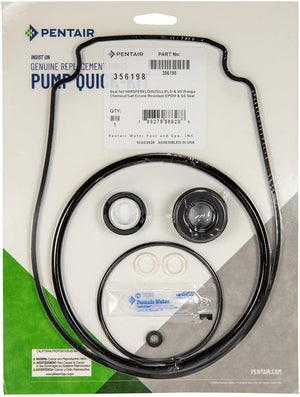
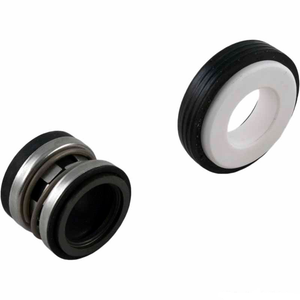
The manufacturers differ on what a dry run does to the seal's future. Pentair says a dry-run seal has to be replaced. Hayward changes the shaft seal only when it leaks. On a seal that drips between the motor and the pump body, they agree. Pentair's seal kit for the WhisperFlo and IntelliFlo, 356198, and Jandy's 5/8 in. mechanical seal, R0479400, are two. A seal change means taking the motor off, which is where replace the motor or the whole pump? picks up.
Plumbing that helps a pump prime
A pump that has always been slow to prime may be fighting its pipes.
- No high points. Jandy warns against a suction line that rises above the pump inlet and drops again, an inverted U that traps a pocket of air. Hayward wants the suction line to slope upward all the way from its lowest point, with no fitting that can hold air.
- Straight pipe into the inlet. Pentair keeps any valve, elbow or tee at least 5 suction pipe diameters from the pump, 10 in. on 2 in. pipe, and says the pump primes faster for it. PHTA-15, the residential energy standard, asks for at least 4 diameters. Hayward's Super Pump manual says 5 on one page and 10 under its pipe chart.
- Low as you can. Hayward puts the inlet as close to the water level as possible, and Jandy says the same.
Replacing the pump while you are at it? What size pool pump do I need starts from the flow your pool and pipe call for.
Hot pumps, pressure and compressed air
- A hot pump stays shut. After a failed prime, the lid stays on until the pot is cool to the touch and the valves are open (Pentair, CaliMar).
- No compressed air. Hayward forbids purging the system with compressed air and allows only a low pressure blower under 5 PSI. It also says never to run or test the system above 50 PSI. Jandy's limit for a pressure test is 35 PSI.
Once it is primed
Check the lid and unions for drips with the pump running, and let a variable speed pump finish its priming cycle before you judge the flow. Then set the run time: how long to run a pool pump has the schedules. A pump that hums without turning, trips its breaker or whines has a problem priming will not fix: replace the motor or the whole pump? starts with the manufacturers' tests. More guides are in Pool School.
Products in this guide

Questions about pool shock
How long does it take a pool pump to prime?
It depends on the pump. Hayward allows a Super Pump 5 minutes, and Pentair's older two speed SuperFlo and WhisperFlo 8 minutes on high speed. Variable speed pumps prime below full speed and take longer: up to 10 minutes on Hayward's MaxFlo VS 500, 15 on its TriStar VS 950, 11 by default on Pentair's IntelliFlo, and 14 to 15 on Jandy's VS FloPro at its 2,750 RPM default from 10 ft above the water. Past your manufacturer's limit, switch it off and look for an air leak.
Why will my pool pump not prime?
Air is getting in or water is not getting to it. Check the pot is full, then the lid and its O-ring. Then the pool level: Pentair wants the water halfway up the skimmer opening, or the skimmer draws air. Then the baskets, a shut suction valve and loose unions. Bubbles from the return jets, Hayward says, or in the pump basket, Jandy says, mean a suction leak. A pump more than 10 ft above the water is past what Hayward and Jandy rate.
How long can a pool pump run without water?
No manufacturer gives a safe time. Jandy says running dry for any length of time causes severe damage and voids the warranty. Hayward says never to run a pump dry, because water cools and lubricates the shaft seal. Pentair says a pump run dry damages its mechanical seal, starts leaking, and the seal must then be replaced. That is why each manufacturer sets a priming limit: stop the pump at it rather than waiting.
Should I put lubricant on the pump lid O-ring?
Follow your pump's manufacturer, because they disagree. Hayward says to clean and lubricate it and names Jack's 327. Pentair says keep it clean and well lubricated. Jandy's VS FloPro start-up instructions say no lubricant at all, soapy water only, while the same manual's troubleshooting table permits a tiny amount of silicone lubricant and no Vaseline. Every manufacturer agrees the lid itself goes on by hand.
Do I have to prime a pump that sits below the pool water level?
Not by hand. Hayward says a pump below its water source primes itself once the suction and return valves are opened. Jandy has you open the filter's pressure release valve so the water pushes the air out. You only fill the strainer pot yourself when the pump sits above the water, where Hayward and Jandy rate their pumps to lift up to 10 ft.
What speed should a variable speed pump prime at?
Whatever primes it reliably at your pad, often below full speed. The defaults are high: 3,450 RPM on Pentair's SuperFlo VS, WhisperFlo VS and IntelliFlo, 2,750 on Jandy's VS FloPro, 3,400 on CaliMar's CaliFlow. Pentair and CaliMar both say most installations do not need full speed, and Pentair asks installers to test a lower speed more than once, draining the water between tries. Lower is slower: Jandy gives 14 to 15 minutes at 2,750 RPM against about 6 at 3,450.
Can I open the pump lid right after it failed to prime?
No. Pentair and CaliMar warn that a pump which failed to prime, or ran with no water in the pot, can build up vapor pressure and hold scalding water. Switch it off at the breaker and wait until the pot is cool to the touch, with the valves open, before the lid comes off. Then refill the pot, check the O-ring, and find the air leak before the next try.