
Pool School, Salt Systems
How to Clean a Salt Cell
Active Pool Supply · Updated October 1, 2026
Turn the power off, take the cell out and look. Hose out loose scale first. Use acid only if scale remains, and mix what your cell's manufacturer prints: Hayward and Pentair give 4 parts water to 1 part acid, Jandy's TruClear 10 to 1. The acid goes into the water. Pentair and Jandy stop the soak at 30 minutes, CompuPool's CPX at 15, Solaxx at 10. Rinse, reinstall and restore power. Clean only when you see scale: Pentair warns that excessive acid washing damages the blades.
How to clean a salt cell, step by step
What you need
- Rubber gloves, eye protection and moving air. Hayward, Pentair and Jandy print all three.
- A plastic bucket and a garden hose with a jet nozzle.
- Muriatic acid, bought locally. We do not carry it. AutoPilot's ChlorSync manual advises against sulfuric and no fume acids.
- The manufacturer's stand, cap or plug, named under your system below.
The steps
- Turn the power off. Switch the salt system off at its control or power center before the cell is unplugged or unscrewed, and at the breaker if your manual says so. Hayward's acid wash instruction starts there. Stop the pump too.
- Take the cell out and look. Hold it to the light. Look for pale, crusty scale on the plates and debris the filter let through. Nothing there? Hayward's manual says to reinstall it.
- Hose out the loose scale. Pentair's method: a garden hose on its jet setting, sprayed into both ends.
- Decide whether it needs acid. Look again. Jandy's TruClear test: if light shows easily between the plates, the cell does not need cleaning. Acid is for scale the hose leaves.
- Mix the solution. Gloves and eye protection on. Water goes in the bucket first, then the acid, in the proportion your manufacturer prints in the table below. Never use acid straight: Pentair says undiluted acid ruins the cell for good.
- Fill or soak, and watch the clock. Pour the solution into the capped or stood cell, or stand the cell in the bucket, as your manual shows. If strong foaming never starts, Pentair and Jandy say the cell did not need acid: stop and rinse. Otherwise wait for the foaming to end, and never pass your manufacturer's limit.
- Rinse thoroughly. Flush inside and out with clean water and inspect. Scale still there? Repeat. The used solution goes where your manufacturer says.
- Reinstall and restore power. Refit the cell, tighten the unions, start the pump, switch the system on and reset the reminder if it has one.
Acid mix, soak time and tools by manufacturer
| System | Acid mix as printed | How the solution meets the cell | Longest time in acid | Tools | Used solution |
|---|---|---|---|---|---|
| Hayward AquaRite, AquaRite 900, AquaTrol, Salt and Swim | 4 parts water to 1 part acid: 1 gallon, 1 quart | Stood cord end down and filled, or soaked with the wire harness dry | None printed: "a few minutes", or 15 minute intervals | Hose, then a plastic or wood scraper; never metal | Back into an approved container; reusable a few times |
| Hayward AquaRite S3 | 4 parts water to 1 part acid | Poured in to the top of the plates | None printed | See the manual | Back into an approved container |
| Pentair IntelliChlor IC | 1 quart of acid in 1 gallon of water | Upright in a 5 gallon bucket, filled until the blades are just covered | 30 minutes | Hose on jet, both ends | Not printed |
| Pentair IntelliChlor Plus, LT | 4 to 1, water to acid | On the acid wash stand, filled to cover the blades; never submerged, which voids the warranty | 30 minutes | Hose on jet only: no pressure washer, screwdriver or brush | Not printed |
| Pentair iChlor | 1 quart of acid in 1 gallon of water | On the acid wash stand | 30 minutes | See the manual | Not printed |
| Jandy AquaPure, PureLink | 1 pint of acid in 2 quarts of water (4 to 1) | Two adjacent ports plugged, solution poured inside | 30 minutes | Hose jet first | Not printed |
| Jandy TruClear | 1 part acid to 10 parts water | Submerged in a small bucket | 30 minutes | Nothing metal | By local regulations |
| Jandy AquaPure Ei | 1 part acid to 10 parts water | Filled to the top of the plates | 30 minutes | See the manual | Into the pool, or by local regulations |
| Zodiac Nature2 Fusion Soft | 10 parts water to 1 part acid; stronger voids the warranty | Only the plates go in | About 5 minutes | See the manual | Neutralized with baking soda |
| AutoPilot Pool Pilot Digital, Nano, ChlorSync | About 1 to 4: water to 2 inches below the blade tops, then acid | Inside the capped cell | Digital 20 minutes; Nano and ChlorSync 15 | Nothing sharp or metal | Into the pool, recommended |
| AutoPilot Soft Touch | 1 part acid into 4 parts water | Immersed until the blades are covered | 15 minutes | Nothing sharp or metal | See the manual |
| CompuPool CPSC | 5 parts water to 1 part acid (Australian manual) | Housing upside down, ports up, filled | "A few minutes" | The manufacturer's method only | Not printed |
| CompuPool CPX | 1 part acid into 4 parts water | Plugged at the open end and filled | 15 minutes | Nothing sharp or metal | Not printed |
| Solaxx | 4 parts water to 1 part acid, or white distilled vinegar, undiluted | Capped at one end, poured in | 10 minutes with acid | Nothing metal or hard, nothing inserted | Into the pool |
One ratio does not fit every cell. Jandy alone prints two: 4 parts water to 1 part acid for the AquaPure, and 10 to 1 for the TruClear, the AquaPure Ei and the Nature2 Fusion Soft. The Fusion Soft manual says a stronger solution will damage the cell and void the warranty. So the 4 to 1 mix Hayward and Pentair print is stronger than those three Jandy and Zodiac manuals allow.
Neither do tools or vinegar. Hayward lets you scrape with plastic or wood; Pentair's Plus and LT guide rules out every mechanical tool, a brush included. Only Solaxx prints vinegar: undiluted white distilled vinegar in place of its acid mix, with a longer wait.
How to clean a Pentair IntelliChlor salt cell
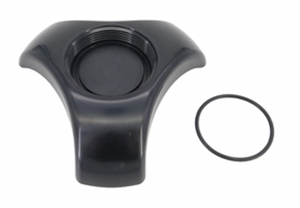
The IC15 to IC60 guide names kit 520670, a cap that lets the cell hold the solution. The guides for the iChlor and for the Plus and LT name the Pentair acid washing kit 523103, a stand, and a Plus or LT cell comes with one.
Pentair's Plus and LT guide prints its 4 to 1 acid mix with a volume table whose ounce figures do not match the ratio. The metric ones do: 200 mL of acid in 0.8 L of water for the LT15, LT25 and Plus30, 350 mL in 1.4 L for the Plus40 and Plus60. Never submerge one of these cells or split its two halves: either voids the warranty.
No Pentair guide prints a way to clear the cell light after cleaning. An iChlor in safety lock restarts when the power goes off and on. Replacements: Pentair salt cells.
How to clean a Hayward TurboCell
Hayward's order is hose, scrape, acid. Scrape what the hose leaves with a plastic or wood tool, never metal, which scratches the coating off the plates. Acid is for severe cases, and every Hayward document read prints one mix: 4 parts water to 1 part acid.
The troubleshooting guide recommends the GLX-CELLSTAND cleaning stand: the cell stands cord end down and is filled to the top. Hayward traces scale to unusually high calcium, most often old pool water. Replacements: Hayward salt cells.
How to clean a Jandy salt cell
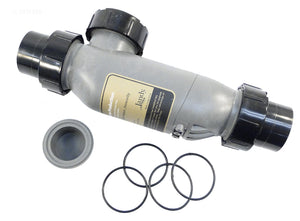
The mix changes with the model. On an AquaPure or PureLink, plug two adjacent ports with port plugs, never with the sensor, and pour the solution inside. The parts list names the SP3P spool and cleaning kit: a 3 port spool and 2 plugs. Code 125 asks for a cleaning, and holding SALINITY for 5 seconds clears the alarm.
The TruClear, AquaPure Ei and Nature2 Fusion Soft take the weak Jandy mix of 10 parts water to 1 part acid. Jandy prints no cleaning accessory number for them. Replacements: Jandy salt cells.
How to clean an AutoPilot salt cell
On a Pool Pilot Digital, Nano or ChlorSync the mixing happens inside the cell. Cap one end, fill with water to 2 inches below the blade tops, then top up with muriatic acid. Water first, acid second. The cap is a 1 1/2 inch MPT clean out plug or AutoPilot's PLA0113 plug; ChlorSync manual LTP0127 names kit STK0227.
AutoPilot says to clean only when calcium buildup is excessive, since needless cleaning reduces cell life, and never to scrape: scratched blades void the warranty. A Nano clears its timed message when you hold SELECT. A ChlorSync Gen II may need its power cycled after cleaning. Replacements: AutoPilot salt cells.
CompuPool CPSC and CPX cells
A CompuPool CPSC housing is laid upside down, ports on top, filled with 5 parts water to 1 part hydrochloric acid, left a few minutes and hosed off. That figure is from the manufacturer's Australian manual. If yours prints another, go by yours: the CPSC warranty may be void if the cell is cleaned any other way.
A CPX has a clear housing, so you can inspect it in place. Its manual fits a cleaning plug and collar to the open end, and prints no part number for the plug. Replacements: CompuPool salt cells.
How to clean a Solaxx salt cell
Solaxx's inline salt system manual fits a cleaning cap to one end and says the wires can stay connected. With acid, foaming takes 5 to 10 minutes. The PureChlor guide makes 10 the limit: still foaming, rinse and go again.
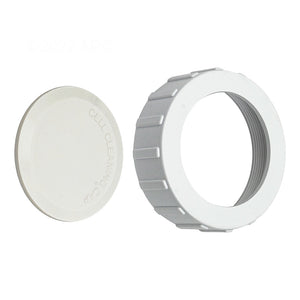
The manual prints no part number for the cap. The one we list is the Solaxx PureChlor cleaning cap, GNR00004. A flashing Check Cell light on a PureChlor is an 8,000 hour timer, cleared by reprogramming the power supply. Replacements: Solaxx salt cells.
After cleaning: the reminder and the salt reading
Reset the reminder. On a Hayward AquaRite, hold the diagnostic button beside the display: 3 seconds in the owner's manual, 5 seconds or until the LED goes dark in the troubleshooting guide. An AquaRite S3 takes one press of OK.
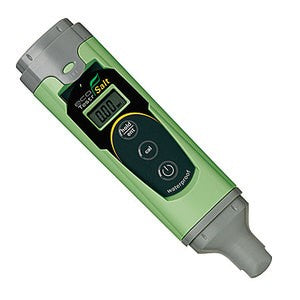
Clean before you add salt. A scaled cell reads salt low. Hayward's guide says a low reading calls for a cleaning, then a meter test of the water, before any salt goes in. A digital salt tester gives the independent number, and Hayward expects its display within 500 ppm of it. If the water is short, the pool salt calculator gives the pounds.
Still not producing? Cold water stops a clean cell: below 50F on a Hayward AquaRite, about 52F on a Pentair. If the Inspect Cell LED is still lit once the cell has been cleaned properly, Hayward says the cell may be worn. When to replace a salt cell has the tests.
How often to clean a salt cell, and how to clean less
Inspect on the manufacturer's schedule and clean only when you find scale: white, crusty deposits on the plates. Pentair and Jandy both call a little scale normal. Hayward's troubleshooting guide expects 3 to 4 cleanings a year at a pH of 7.2 to 7.8 with moderate calcium.
| System | The manual says to inspect | Reminder on the unit |
|---|---|---|
| Hayward AquaRite, AquaRite 900, AquaTrol | Every 3 months, or whenever the filter is cleaned | Inspect Cell LED flashes at about 500 hours |
| Hayward AquaRite S3 | When the message appears | Inspect Cell message every 500 hours |
| Pentair IntelliChlor IC | Every 2 months if the blades tend to scale; twice a year at least | CELL light flashes green |
| Pentair IntelliChlor Plus, LT | At least every 2 months | CHK CELL / INSPECT |
| Jandy AquaPure, PureLink | Monthly at first; every 2 months for a cell that scales; twice a year at least | Service code 125 |
| Jandy TruClear, AquaPure Ei | Every month | None found |
| AutoPilot Pool Pilot Digital | When the display asks | Check System light, Check/Clean Cell |
| AutoPilot Digital Nano | Not stated | Cell inspect due, a timed message |
| AutoPilot ChlorSync | Every 8 weeks if it scales (manual LTP0127) or every 2 weeks (Gen II manual, online) | CLN CELL SOON, then CLN CELL |
| CompuPool CPSC | Every 6 months | None found |
| CompuPool CPX | Cleaning about every 3 to 6 months | None found |
| Solaxx | Monthly; cleaning every 3 to 4 months (PureChlor guide) | Check Cell flashes at 8,000 hours |
Why cells scale
PHTA's technical note says scale forms in a cell even in balanced water, because pH runs high at the cathode plates, and that acid cleaning and polarity reversal both cost cell life.
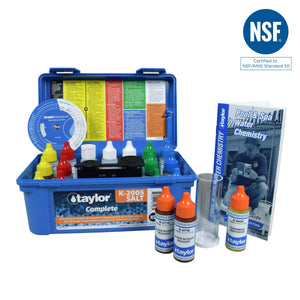
- Hold the manufacturer's calcium and pH figures. Calcium hardness: 200 to 400 ppm for Hayward's AquaRite, Pentair and AutoPilot, 175 to 400 for a Jandy AquaPure, 200 to 300 for a Fusion Soft. pH: 7.2 to 7.8 for Hayward and Pentair, 7.4 to 7.6 for a Jandy AquaPure or TruClear. A Taylor K-2005-SALT kit reads hardness, pH and salt.
- Leave the self cleaning period alone unless scale forces it. Polarity reverses every 3 hours on a Jandy AquaPure and a Hayward AquaRite from firmware 1.55, every 2 hours for 30 days and then 3 on a Pentair IC, 4 by default on an AutoPilot, 6 on a CompuPool CPX. Pentair says the cycle tends to reduce cell life. AutoPilot and CompuPool say a shorter one does. Jandy's TruClear manual still suggests 3 hours, not 5, where total hardness is above 400 ppm.
- Keep dry acid out. Pentair says never to adjust pH with sodium bisulfate. Hayward discourages it, above all in arid regions.
Products in this guide

Questions
How often should I clean my salt cell?
Inspect on your manufacturer's schedule and clean only when you see scale. Hayward says to inspect every 3 months, or when the Inspect Cell light flashes at about 500 hours. Pentair says every 2 months, Jandy's TruClear and AquaPure Ei manuals every month, CompuPool's CPSC manual every 6 months. Hayward's troubleshooting guide expects 3 to 4 cleanings a year in water at a pH of 7.2 to 7.8 with moderate calcium. A cell with no scale on it goes back in without acid.
What ratio of muriatic acid to water do I use to clean a salt cell?
It depends on who made the cell. Hayward, Pentair, Solaxx and CompuPool's CPX manual give 4 parts water to 1 part acid. Jandy gives 4 to 1 for the AquaPure and 10 parts water to 1 part acid for the TruClear, AquaPure Ei and Nature2 Fusion Soft. CompuPool's Australian CPSC manual gives 5 parts water to 1 part acid. AutoPilot caps the cell, fills it with water to within 2 inches of the blade tops and adds acid to the brim, about 1 to 4. In every manual the acid goes into the water.
How long do you soak a salt cell in acid?
Until the foaming stops, and never past the limit your manufacturer prints. Pentair and Jandy's AquaPure, TruClear and AquaPure Ei: 30 minutes. AutoPilot: up to 20 minutes on a Pool Pilot Digital, 15 on a Nano, ChlorSync or Soft Touch. CompuPool CPX: 15 minutes. Solaxx: 10 minutes. Zodiac's Nature2 Fusion Soft manual says about 5. Hayward prints no maximum: its owner's manuals say a few minutes and its troubleshooting guide works in 15 minute intervals. If strong foaming never starts, Pentair and Jandy say to stop, because the cell did not need acid.
Can I clean a salt cell with vinegar?
Only Solaxx prints vinegar. Its owner's manual allows undiluted white distilled vinegar in place of its muriatic acid mix and notes that vinegar takes longer than the 5 to 10 minutes acid needs. Hayward, Pentair, Jandy, AutoPilot and CompuPool specify diluted muriatic or hydrochloric acid. On their cells, follow the manual: CompuPool's CPSC warranty, for one, may be void if the cell is cleaned by a method other than the manufacturer's.
Can I use a pressure washer on a salt cell?
Not on a Pentair IntelliChlor Plus or LT. Pentair's guide says a pressure washer, or a mechanical tool such as a screwdriver or brush, can damage the blade coating. The manuals that name a tool for flushing name a garden hose: on its jet setting for Pentair, at high pressure for Hayward, AutoPilot and CompuPool's CPX. AutoPilot's Nano manual says to rinse with light water pressure once the acid is out. Use the hose.
Why is my Inspect Cell light still on after cleaning?
On a Hayward AquaRite the flashing reminder has to be reset by hand. Hold the diagnostic button beside the display: the owner's manual says 3 seconds, the troubleshooting guide says 5 seconds or until the LED goes dark. That restarts the 500 hour timer. If the light is on steady, or stays on after a thorough cleaning with the salt level right, Hayward says the cell may be worn and need replacing. Check too that the control is set to your cell model. Hayward lists a wrong setting as a cause of a flashing light.
Does cleaning a salt cell shorten its life?
Too much acid cleaning does, by the manufacturers' own account. Pentair warns that excessive acid washing damages the blades. Jandy's TruClear manual says excessive cleaning can shorten cell life, AutoPilot says needless cleaning reduces it, and CompuPool's CPX manual says the same. PHTA's technical note says acid cleaning and polarity reversal both cost cell life. Hayward's documents print no such warning, but they keep acid for severe cases. Hose first, and use acid only on scale that stays.