
Olympic
Olympic Pool Coatings 1 Gallon Zeron Blue Ice Epoxy Coating, 391 GMPN 391 G
$22699
Out of stock
Email me when it is back
New customer? Create an account
Sign in to track an order, view past orders, start a return, and save the equipment you own so every part you see already fits it.
Paint for the inside of a concrete or plaster pool, in the three chemistries that exist: epoxy, rubber base enamel and water base acrylic. Which one you need is usually not a preference. It is decided by what is already on the wall, because a coating has to be compatible with the one under it or it lifts, and a pool that has been painted before is almost always locked to whatever it was painted with. If nobody knows, that is worth finding out before you buy anything.


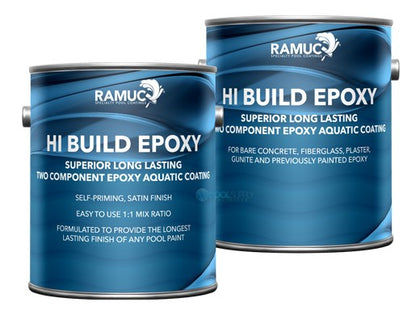

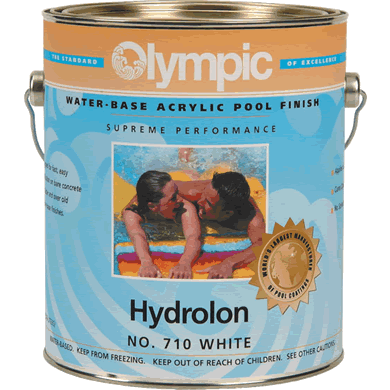
Olympic and Ramuc coatings in all three chemistries: Zeron, Poxolon 2, Ramuc EP and Hi-Build in epoxy, Paralon 2 and Optilon in rubber base enamel, and Hydrolon in water base acrylic, in white, Blue Ice and Bikini Blue. Poxoprime II and Gunzite epoxy primers for bare or patched surfaces, and Ramuc Slide Coat for a slide rather than a pool shell.
Putty, patch compound and plaster repair are a different job and are in repair supplies. Waterline tile is in pool tile.
How do I know what my pool was painted with?
Test it, because guessing wrong costs the whole job. The usual method is to rub a small hidden area with a rag and a solvent: an acrylic softens and comes away readily, a rubber base is slower to give, and an epoxy barely reacts at all. A chalky surface that leaves colour on your hand when you wipe it dry is a sign of an older rubber base or acrylic that has weathered. If the pool has never been painted, you are free to choose, and that is the one time you are.
Epoxy, rubber base or acrylic?
Epoxy lasts longest and costs the most in money and in effort: it is a two part product with a catalyst, it needs a properly prepared surface, and it gives the hardest, glossiest film. Rubber base sits in the middle and is the traditional choice on an older pool that has had it before. Water base acrylic is the easiest to apply, tolerates a damp surface better than the others and is the most forgiving of an imperfect job, and it is the shortest lived. If the pool is bare and you are willing to do the preparation, epoxy is the one to choose.
Do I need a primer?
On bare plaster, gunite or a patched surface, yes, and there are two here for the purpose. A primer gives the topcoat something to key into and seals a porous surface so it does not drink the first coat unevenly. Over a sound existing coating of the same chemistry you generally do not need one, which is the cheaper path when a pool is simply due a refresh. Primers here are epoxy, including a two part one, so they go under the epoxy topcoats rather than under everything.
Can I paint over a pool that was painted with something else?
Only by removing what is there, and that is the honest answer rather than the convenient one. Epoxy over an old acrylic or rubber base will pull it off the wall as it cures, and acrylic over epoxy has nothing to grip. There is no primer that reconciles them. So the choice is to stay with the chemistry the pool already has, or to strip and blast back to bare surface and start again, which is a contractor job. A repaint that fails does so after the pool is full, which is why this is worth settling first.