Get your unadvertised price ›
New customer? Create an account
Sign in to track an order, view past orders, start a return, and save the equipment you own so every part you see already fits it.
Equipment for pools that the public swims in: hotels, clubs, schools, apartment complexes and municipal pools. Three things separate it from residential gear. The duty, because a commercial pool runs far longer hours against a far heavier bather load. The power, since the pumps here reach 15 HP and mostly want three phase. And the certifications, ASME on the heaters and NSF on much of the rest, which is often what an inspector actually looks for.


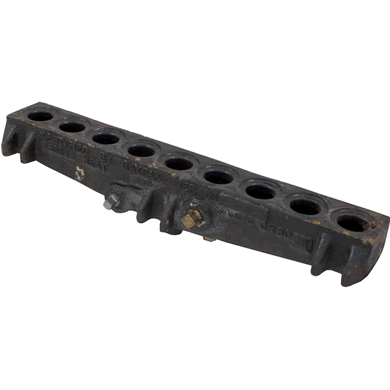
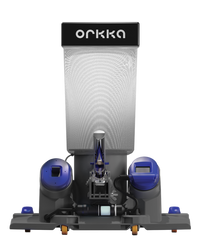
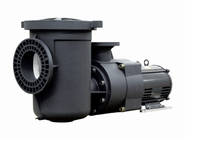
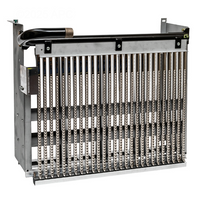
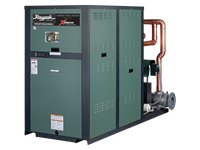
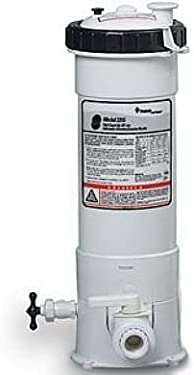
ASME gas heaters from Raypak and Lochinvar up to 1,500,000 BTU, Pentair EQ, EQK and C Series pumps from 3 to 15 HP in single and three phase on 208 to 460 V, Coates electric heaters, high capacity chlorinators, commercial robotic cleaners and portable vacuums, and the S.R. Smith deck range: Standard Plus ladders, Frontier diving boards and stands, commercial handrails and Swim N' games.
The same machines in residential sizes are on their own pages: pool heaters, pool pumps and pool handrails.
What actually makes a piece of equipment commercial?
Duty, power and paperwork, in that order. A commercial pool runs most of the day against a bather load a family pool never sees, so the machines are built heavier and rated for continuous service rather than a timer schedule. They are larger: pumps on this page reach 15 HP and heaters 1,500,000 BTU. And they carry certifications a residential unit does not need, which is frequently the part that decides what you are allowed to install rather than what would physically work.
What does the ASME stamp mean?
It certifies the pressure vessel inside the heater, not the heater as a whole. The heat exchanger is a vessel holding water under pressure over a flame, and an ASME stamped one is built, inspected and documented to the American Society of Mechanical Engineers boiler and pressure vessel code. Many jurisdictions require it on any heater serving a public pool, and many heaters here carry it. Whether yours must is a question for the authority that inspects you, because it is not uniform across states or counties.
Do I need three phase power?
Only if the pump does, and on this page a good many do. Three phase runs a large motor more smoothly and more efficiently than single phase and is normal in commercial buildings, which is why the pumps here are listed at things like 208-230/460 V. What matters is that it is not a preference you can change later: a three phase motor will not run on single phase supply, and a plant room without it needs either a single phase model or a phase converter, which is a conversation to have before ordering rather than after.
Can I put residential equipment on a small commercial pool?
Sometimes it is physically fine and still not permitted, and those are two separate questions. A small apartment pool may be no larger than a generous back garden one, and a residential heater or pump would move the water perfectly well. But a pool the public uses is inspected, and the authority may require certified equipment regardless of the size, alongside rules on turnover, drain covers and safety equipment. Ask the health authority what they will pass before you specify anything, because that answer is the one that counts.