


Pentair
Pentair SuperFlo VS 1.5 HP Variable Speed Pool Pump, EC-342001MPN EC-342001
$1,48900$1,609.00
Save $120.00
In stock

New customer? Create an account
Sign in to track an order, view past orders, start a return, and save the equipment you own so every part you see already fits it.
Whole pumps here, wet end and motor together, for a pool that needs a new one rather than a repair. Two things decide which. Where the pump sits: an inground pump stands above the water and has to pull water up to itself, so it carries a strainer pot in front of the impeller, while an above ground pump is mounted low enough that the pool feeds it without help. And how it runs, which since the July 2021 federal standard mostly means variable or two speed. If the wet end is sound and only the motor has gone, that is a motor, and it has its own page.


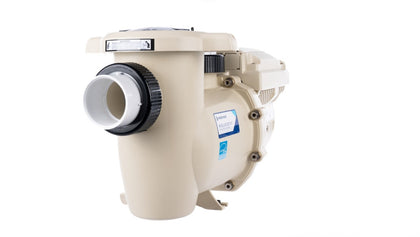


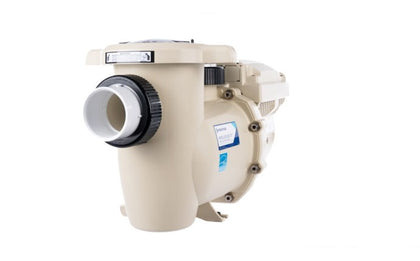


Pumps for inground and above ground pools, plus spa pumps and the booster pumps that drive a pressure side cleaner. Horsepower runs from 0.12 up to 15, in variable, two and single speed, from Pentair, Hayward, Waterway, Polaris, CaliMar, Moov, Speck and Balboa. Ports are mostly 1.5 in. union or 2 in. threaded, and the commercial bodies go up from there.
Three neighbours, because a pump is often not what somebody actually needs. A motor, when nothing but the motor has failed, is in pump motors. Seals, impellers, baskets and lids are in pool pump parts. A heat pump heats the water and is a different machine with a confusable name, in pool heat pumps.
Is a 1.5 HP pump always a 1.5 HP pump?
No, and this is the trap on every pump shelf. Horsepower on the label can be the motor's rated figure or that figure with its service factor already counted in, which is what up-rated means. A full-rated pump reaches the number without the multiplier, so it is the stronger machine of the two wearing the same badge. Thirty four pumps on this page say up-rated in their name. The figure that actually compares two pumps is total horsepower, written THP, and where a maker publishes it we carry it in the specifications.
What size pump does my pool need?
Size it to the filter and the pipe, not to the pool. A pump that moves more water than the filter is built to pass will not clean faster, it will run at higher pressure, shorten the filter's life and can push water past the media. The filter's design flow and the size of your suction and return lines are the two ceilings, and a pump matched to them beats a bigger one on every measure that matters. Most residential pools sit between 1 and 2 HP for that reason rather than because of their volume.
Do I have to buy a variable speed pump now?
For most residential replacements, effectively yes, and the catalogue shows it: two speed and variable speed together are 130 of the pumps here against 28 single speed. A federal standard dated July 2021 changed what may be made and sold, and the single speed pumps still on the shelf are the ones outside it, small bodies, up-rated ones and three phase commercial pumps. The specifications name the standard on the pumps that publish it.
Can I put an inground pump on an above ground pool?
Usually not, and it is about priming rather than power. An inground pump is mounted above the water and has to lift water to itself before it can move any, which is what the strainer pot in front of the impeller is for. An above ground pump is mounted low enough that the pool pushes water into it, so many of them have no pot at all and cannot draw a column of water upward. Put one in the wrong place and it either never primes or runs dry.
Wire it for 115V or 230V?
If the pump takes both, 230V is usually the better choice, and the reason is current rather than the electricity bill. Roughly double the voltage and you roughly halve the amps: our commercial rows show the same pump reading 19.9 to 17.8 A on the low leg and 8.9 A on the high one. Lower current means a smaller breaker and less voltage drop over a long run to the pad. Efficiency is a separate question and not a safe assumption, because the two pumps here that publish a weighted energy factor at both voltages disagree about which way it goes.
Do I need a whole pump or just the motor?
Look at what failed. If the motor is humming, tripping the breaker, screaming on its bearings or dead, and the wet end is sound with no cracks in the pot and a good lid seal, a motor and a new shaft seal puts it right for a fraction of a pump. Replace the whole thing when the housing is cracked, the threads on the ports are gone, the pump is old enough that parts are scarce, or you are moving up to variable speed anyway. Motors are on their own page, and so are seals and impellers.
What is a booster pump for?
A pressure side cleaner, and nothing else. A Polaris or a Letro style cleaner runs on a jet of water at a pressure the filter pump does not produce on its own, so a small dedicated pump sits on its own line and its own timer and feeds that one wall fitting. It is not a second filter pump and it will not circulate the pool. If your cleaner plugs into a wall fitting rather than the skimmer and stalls or crawls, the booster is the thing to look at.